
In today’s fast-paced digital landscape, readers demand quick access to reliable news. Getting users to the information they want without slowdowns or distractions is at the heart of modern news design. Adopting a simple website structure makes content delivery clear and efficient for all audiences, regardless of device or technical abilities. Minimalism in digital news spaces removes the obstacles for readers intent on staying informed. This approach lets stories and headlines shine, ensuring visitors find the news instead of getting sidetracked by flashy elements or clutter. By implementing minimalist design, news providers create a platform that prioritizes substance and clarity for everyone who visits. From typography and navigation to visual hierarchy and mobile responsiveness, the best news sites succeed by focusing on what matters most: informative content delivered seamlessly. Effective design choices cater to the needs of both readers and search engines, building loyalty and engagement over time. The intent behind a clutter-free approach is not just aesthetic. It serves a vital function by boosting usability, speed, and credibility. Each design decision, whether related to spacing, layout, or how stories are ranked, serves the purpose of putting the user first in every interaction.
The Importance of Minimalism in News Website Design
Minimalism in news website design means prioritizing essential content and trimming away the excess. When users visit a minimalist news site, they find well-organized headlines and stories without visual noise. Minimalist layouts often use unobtrusive color palettes, simple icons, and predominantly text-based elements that make information retrieval effortless.
According to UX research from Nielsen Norman Group, clean designs directly impact engagement and satisfaction. Such sites not only present information clearly but also establish trust, as readers can focus entirely on the journalism rather than distracting features.
Typography: Enhancing Readability
Typography is a core aspect of user experience on any news platform. To ensure readability, many news sites use a blend of classic serif fonts for headlines and modern sans-serif fonts for body content. Serif fonts command attention and add authority, while sans-serif fonts provide clarity and comfort when reading long articles. Successful platforms standardize font sizes and line spacing to avoid visual fatigue, making sure headlines stand out while the body text remains easy to scan. Consistency in typography hierarchies, like differentiating bold headlines from lighter subheadings, helps readers instantly recognize the structure and priority of information.
Navigation: Ensuring Intuitive User Experience
Streamlined navigation is at the heart of user-friendly website design. Readers expect to find content within seconds, so top news sites always include a prominent navigation bar featuring broad categories like “Home,” “World,” “Politics,” “Business,” and “Technology.” Dropdown menus and breadcrumb trails further support users in tracking their place and exploring related topics without feeling lost or overwhelmed. Navigation should remain consistent throughout the site, regardless of device or screen size. This inclusive approach lowers the cognitive barrier for both new and returning visitors while keeping access to popular topics just a click away.
Visual Hierarchy: Guiding Reader Attention
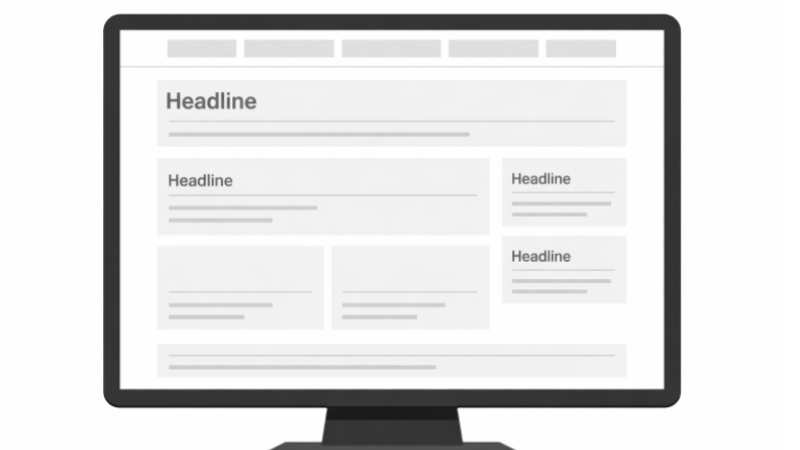
A strong visual hierarchy directs readers to the most important stories first. Headlines are displayed with larger fonts and bold styling, often positioned at the top or center of a page. Supporting articles may use smaller thumbnails, lighter weights, or secondary positions to create a logical flow across the layout. Well-designed news websites use elements like color contrast, image placement, and section dividers to group similar topics together. This approach helps guide the eyes naturally from the most urgent news to in-depth features or opinion pieces lower down on the page.
White Space: Creating Breathing Room
White space, or negative space, provides essential breathing room between headlines, images, and other elements. Ample spacing reduces visual overload and makes scanning content more comfortable for the reader. This not only benefits readability but also improves the perceived quality of the brand. White space does not mean emptiness. Rather, it organizes content, promoting a sense of elegance and encouraging readers to stay longer on the site, according to Smashing Magazine.
Mobile Responsiveness: Catering to All Devices
Mobile responsiveness ensures that news websites look and work well on smartphones and tablets as well as on larger screens. Responsive designs adapt content, images, and navigation to fit the viewing environment so users do not need to pinch or zoom to read. This is especially important as nearly half of all web traffic now comes from mobile devices. Features like collapsible menus, adjustable image sizes, and touch-friendly buttons are standard practices for modern publishers who want to engage every possible reader, no matter how they access the news.
Loading Speed: Keeping Readers Engaged
Fast websites keep users happy and engaged. Slow-loading pages can drive readers away before they even see the headlines. To boost loading speed, news sites should compress images, limit heavy scripts, and optimize backend technologies. Leveraging browser caching and content delivery networks allows for faster access regardless of location. Page speed also influences search rankings on platforms like Google, making it critical for news outlets that want to maximize exposure and traffic. Tools such as Google PageSpeed Insights provide actionable steps for improving site performance and maintaining high engagement rates.
Conclusion
The essence of designing a simple news website lies in championing minimalism, clarity, and speed. By focusing on clean layouts, effective typography, intuitive navigation, guiding visual hierarchy, appropriate white space, robust mobile responsiveness, and optimal loading speed, designers and publishers can craft news sites that serve readers’ needs directly. Following these principles not only improves user experience but also builds lasting trust and engagement in today’s information-rich world.