
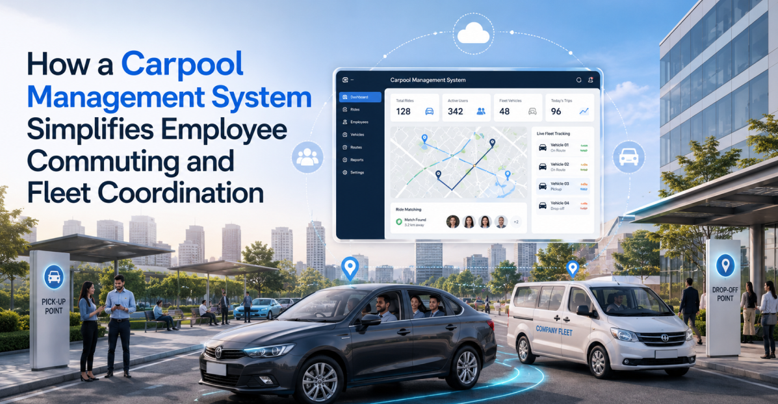
Nobody enjoys sitting in traffic every morning just to reach the office. Ask most employees what they would change about their workday. They’d probably say commute. Now flip to the finance side and you will hear a similar complaint. Fuel, parking, and vehicle costs keep creeping up every quarter.
These two frustrations are the same problem wearing different hats. A modern carpooling system sits right at that overlap. It brings down what companies spend on commuting while also cutting emissions from all those half empty cars on the road. That is why more organizations are finally taking it seriously.
Think about what solo commuting really costs once you add it up. Fuel, parking demand, and vehicle wear stack up fast. Now think about what those same trips do to your emissions numbers. A well-built carpool management system turns that waste into savings by automatically matching employees and tracking the impact as it happens.
This blog walks through how that shows up in practice.
Why Cost And Carbon Are Now Linked Business Priorities
Commute costs and emissions used to live in separate conversations. That separation no longer reflects how leadership teams actually operate.
● The Rising Price Of Solo Commuting
Fuel prices have climbed steadily across most major markets. Parking costs near office locations keep rising alongside them. Every solo commuter adds directly to these expenses over time.
Companies offering reimbursements feel this pressure on their budgets. Shared rides spread these costs across multiple employees instead.
● Emissions Reporting Is No Longer Optional
Many organizations now report emissions tied to employee commuting. This falls under broader Scope 3 disclosure requirements in most frameworks. Investors and regulators expect accurate, defensible numbers here.
A structured program makes this data far easier to collect. Manual tracking simply cannot keep pace with these expectations anymore.
● Investors And Employees Are Both Watching
Investors increasingly factor sustainability performance into their decisions. Employees also care about working for a responsible employer. Both groups notice when a company takes commute emissions seriously.
This dual attention raises the stakes for getting it right. A visible carpooling program signals commitment beyond a simple policy statement.
● Why Old Commute Habits No Longer Work
Traditional commute planning assumed fixed schedules and single office locations. Hybrid work and multiple offices have broken that assumption completely. Static parking policies and manual carpool lists cannot keep up.
Organizations need tools built for this more complex reality. Strong employee commute management is exactly what modern platforms deliver.
How A Modern Car Pooling System Actually Works
Understanding the mechanics helps explain why results follow so quickly. A good car pooling system automates work that used to take hours.
● Matching Employees By Route And Schedule
The system pairs employees based on location and commute timing. This removes the guesswork employees previously handled on their own. Matches update automatically as schedules or routes shift.
● Real Time Coordination Instead Of Manual Planning
Employees receive live updates about pickup times and route changes. Admins no longer need to manually confirm every ride pairing. This shift saves significant time for both employees and administrators.
● Data Collection Built Into Every Trip
Every completed ride generates data automatically in the background. This includes distance traveled, fuel saved, and emissions avoided. That data becomes the foundation for cost and sustainability reporting.
● Fitting Into Existing Company Infrastructure
A strong platform integrates with existing HR and identity systems. Employees onboard using their official work email for verification. This keeps the rollout simple for broader corporate transportation planning.
How Carpooling Reduces Direct Costs For Organizations
The cost benefits show up quickly once a program launches. Here is where most of the measurable savings actually come from.
● Lower Fuel And Reimbursement Expenses
Shared rides mean fewer vehicles making the same daily trip. Fuel expenses drop as a direct result of fewer solo drives. Reimbursement costs fall in proportion to reduced individual mileage.
● Reduced Parking And Real Estate Pressure
Fewer vehicles on site means lower demand for parking space. Some companies repurpose that freed space for other business needs. This can meaningfully reduce long term real estate costs.
● Fewer Company Vehicles Needed Overall
Organizations running their own fleets can right size vehicle counts. Better occupancy per trip reduces the total vehicles required daily. This lowers maintenance, insurance, and depreciation costs across the fleet.
● Simplified Administrative And Reporting Costs
Automated matching and tracking reduce manual coordination work significantly. Admin teams spend less time managing spreadsheets and manual approvals. That saved time translates into real operational cost reductions.
How Carpooling Cuts Carbon Emissions
Cost savings tell only part of the story here. The emissions side matters just as much for most organizations today.
● Fewer Vehicles On The Road Each Day
Every shared ride replaces multiple solo trips with one vehicle. Fewer vehicles on the road directly reduces total emissions output. This effect compounds across hundreds of employees over time.
● Better Vehicle Occupancy Changes The Math
Average vehicle occupancy in many regions remains low today. Most trips carry close to one passenger per vehicle. Raising that number even slightly creates meaningful emissions reductions. Research from groups studying transport emissions consistently supports this pattern.
Climate focused research organizations rank carpooling as a highly effective transport solution. The core reason is simple, shared capacity avoids wasted fuel and wasted emissions.
● Supporting Scope 3 Emissions Reporting
Commute emissions often fall within Scope 3 reporting categories. Carpooling data provides a clear, trackable input for these reports. This makes annual sustainability disclosures more accurate and defensible.
● Small Daily Actions Adding Up Over Time
A single shared ride seems small on any given day. Multiplied across a full workforce, the impact becomes substantial. Consistent participation matters more than occasional, one off efforts. Steady carbon emissions reduction comes from daily habits, not one time pushes.
The Business Case, Not Just An Environmental One
Sustainability goals matter, but leadership also wants clear financial justification. A strong carpooling program delivers both at the same time.
● Building A Simple ROI Model
Start by estimating current commute related costs across your workforce. Include fuel reimbursements, parking expenses, and any fleet related spend. Compare that baseline against projected savings from shared rides.
● Employee Retention And Satisfaction Gains
Reduced commute stress often improves overall employee satisfaction. Employees also appreciate lower personal commuting costs over time. These gains support broader retention goals beyond pure cost savings.
● Strengthening Employer Brand And Recruitment
Job seekers increasingly evaluate a company’s sustainability commitments. A visible, well run carpooling program supports that positioning. It becomes a tangible example rather than a vague policy claim.
Example: Estimating Savings For A 200 Person Office
Consider a company with 200 employees commuting daily to one office. Assume half of them currently drive alone to work. Shifting even a third of those solo drivers into shared rides matters.
That shift could mean roughly 30 fewer vehicles on the road daily. Fuel and parking savings alone often justify the platform cost quickly. Emissions data from those avoided trips also strengthens sustainability reporting.
This kind of simple estimate helps build internal buy in fast. It turns clear commute cost savings into numbers leadership can evaluate directly.
What To Look For In A Modern Car Pooling System
Not every car pooling system delivers the same results for these goals. These are the features worth prioritizing during evaluation.
● Smart Matching And Route Optimization
Reliable ride matching software connects employees efficiently by route and schedule. Poor matching leads to low adoption and weak results.
● Reporting Built For Cost And Emissions Tracking
Look for dashboards that report both financial and environmental metrics. This dual reporting makes the business case easier to communicate.
● Safety And Verified Onboarding Features
Safety tools like SOS alerts build trust among employees. Verified onboarding through official work email keeps the platform secure.
● Scalability Across Offices And Teams
A platform should support multiple locations and shift patterns. This matters for enterprise mobility planning as companies grow.
Common Barriers To Adoption And How To Solve Them
Even strong carpool software can struggle without addressing common obstacles.
● Low Initial Employee Participation
Early adoption often starts slowly across most organizations. Simple incentives like priority parking can help build momentum.
● Concerns Around Safety And Trust
Some employees hesitate to ride with unfamiliar colleagues initially. Verified profiles and safety features address this concern directly.
● Inconsistent Schedules In Hybrid Workplaces
Flexible schedules make fixed carpool arrangements harder to maintain. A dynamic matching system adapts to these changing patterns automatically.
● Lack Of Leadership Buy In
Programs without visible leadership support often struggle to gain traction. Sharing early cost and emissions data helps secure that support.
Steps To Launch A Car Pooling Program Successfully
A structured rollout improves the odds of long term success.
- Assess current commute data across your workforce
- Choose a platform built for both cost and emissions tracking
- Pilot an employee carpooling program with one office first
- Offer incentives to encourage early adopters
- Track results and share them with leadership regularly
- Expand gradually once the pilot shows measurable results
The Future Of Cost And Carbon Focused Commuting
Commute technology will keep evolving alongside sustainability expectations.
● Carpooling As Part Of Broader ESG Strategy
More companies are folding sustainable commuting into formal ESG strategies. This shift reflects growing pressure for measurable, reportable climate action.
● Smarter Matching Through Better Data
Platforms will continue improving how they match employees efficiently. Better data leads to higher participation and stronger results.
● Rising Demand For Audit Ready Reporting
Regulatory pressure will likely increase around emissions disclosure accuracy. Platforms built for compliance ready reporting will matter even more.
Conclusion
Cost pressure and carbon pressure are no longer separate conversations for leadership. A modern car pooling system addresses both at the same time. It reduces fuel and parking expenses through shared rides daily. It also lowers emissions by putting fewer vehicles on the road. Organizations running strong corporate carpooling programs see stronger results overall. They also build a clearer, more defensible sustainability story for stakeholders. The business case becomes easier once real numbers replace vague assumptions.
Getting started does not require a complex overhaul of existing operations. It starts with understanding your current commute costs and emissions baseline. From there, choosing the right carpool management system makes the difference. The right platform handles matching, tracking, and reporting without added complexity. It also grows alongside your organization as offices and teams expand.