
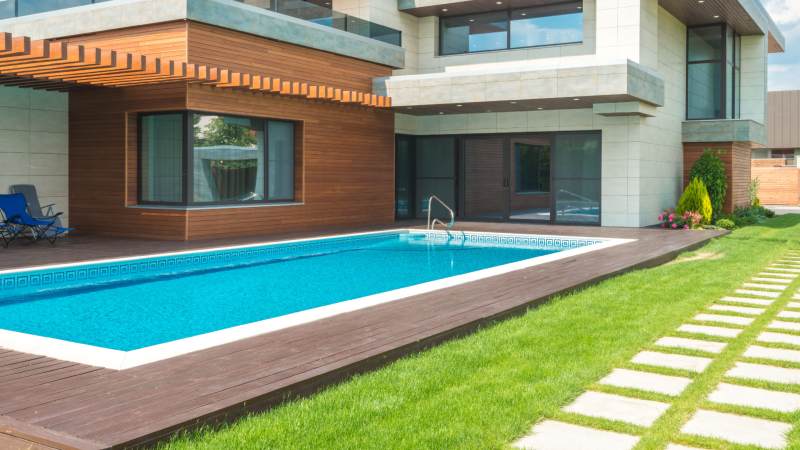
A modern backyard should feel like an extension of the home rather than a completely separate space. From outdoor kitchens and shaded patios to swimming pools and lounge areas, homeowners are putting more thought into how every surface contributes to the overall design. One feature that can dramatically improve the appearance of a pool area is a stamped concrete pool deck.
Stamped concrete can recreate the appearance of natural stone, brick, slate, wood, and other materials while maintaining the durability and versatility of concrete. Choosing the right pattern can help a pool deck complement contemporary architecture, landscaping, furniture, and other outdoor features.
Here are some of the best stamped concrete patterns to consider when creating a modern backyard.
Why Choose a Stamped Concrete Pool Deck?
A stamped concrete pool deck offers homeowners a wide range of design possibilities without requiring individual stones, bricks, or pavers to be installed across the entire pool area.
The stamping process involves pressing textured molds into freshly placed concrete before it fully hardens. Contractors can also add integral colors, surface stains, and accent tones to create more realistic variations.
One major advantage is design flexibility. According to industry estimates, professionally installed decorative concrete can last 20 to 30 years or longer when properly installed and maintained.
Stamped concrete also has fewer joints than traditional pavers, which can help reduce areas where weeds may grow or individual units may shift over time.
1. Large Ashlar Slate Patterns
Ashlar slate continues to be one of the most popular patterns for modern pool decks.
This design uses rectangular and square shapes arranged in a repeating pattern that resembles cut natural stone. Large-format ashlar patterns work especially well with contemporary homes because their clean geometry creates an organized appearance.
Neutral colors such as light gray, charcoal, sandstone, and beige can help the pool area maintain a sophisticated look.
For an even more modern appearance, homeowners can choose subtle color variation rather than strongly contrasting grout lines.
2. Seamless Stone Texture
Homeowners who want texture without noticeable repeating shapes may prefer seamless stone.
Instead of creating individual blocks or tiles, seamless stamps add natural-looking surface texture across the concrete.
This style can resemble lightly textured limestone, granite, sandstone, or worn stone while maintaining a simple visual appearance.
A seamless stamped concrete pool deck can work particularly well in minimalist backyard designs where the swimming pool, landscaping, and outdoor furniture should remain the main visual features.
3. European Fan Pattern
The European fan pattern creates curved rows of stones arranged in overlapping fan shapes.
Although the design has traditional origins, it can still complement modern outdoor environments when paired with contemporary colors.
Using shades such as soft gray, silver, or charcoal gives the pattern a more updated appearance.
European fan designs are particularly attractive around curved swimming pools because the pattern naturally follows rounded edges and creates visual movement throughout the deck.
4. Random Stone Patterns
Random stone stamping imitates irregular pieces of natural flagstone.
Unlike geometric patterns, the shapes vary in size and direction, giving the surface a more organic appearance.
This pattern is a strong choice for modern backyards that combine contemporary architecture with natural landscaping.
For example, a backyard featuring tropical plants, decorative rocks, water features, and large planters can benefit from the softer appearance of random stone.
Using one primary color with two or three subtle accent tones can also make the stamped surface appear more realistic.
5. Wood Plank Stamped Concrete
Wood-style stamping has become increasingly popular for outdoor living areas.
These stamps recreate features such as wood grain, plank lines, and natural imperfections while using concrete instead of actual lumber.
A wood-pattern stamped concrete pool deck can be especially effective for homeowners who want a warm, resort-inspired atmosphere.
Common colors include weathered gray, light brown, walnut, and driftwood tones.
Compared with real wood decking, concrete does not have the same concerns about splintering, insect damage, or rotting from constant moisture exposure.
6. Large Tile Patterns
Large square or rectangular tile patterns are ideal for sleek contemporary backyards.
Common layouts include 24-by-24-inch squares or oversized rectangular designs that imitate modern outdoor porcelain tiles.
Larger patterns create fewer visual lines across the pool deck, helping the space look cleaner and more open.
This can be especially beneficial in smaller backyards where complicated patterns may make the area appear crowded.
Light gray, cream, and off-white tones can also reflect more sunlight than very dark surfaces, helping create a brighter pool environment.
7. Cobblestone Patterns with Modern Colors
Cobblestone may sound traditional, but modern coloring techniques can completely change its appearance.
Rather than using classic red or brown colors, homeowners can select muted shades such as graphite, slate, or cool gray.
This combination provides the character of cobblestone without making the backyard feel overly rustic.
Cobblestone patterns can also work well as decorative borders around a simpler central deck design.
How to Choose the Right Pattern
Choosing the best stamped concrete design involves more than selecting the most attractive pattern from a catalog.
Consider the architecture of the home, pool shape, landscaping, outdoor furniture, and nearby materials.
For example, homes with clean lines and large windows often pair well with ashlar slate or oversized tile patterns. Properties with lush landscaping may look better with random stone or seamless natural textures.
Color is equally important.
Very dark concrete can absorb more solar heat than lighter surfaces. During intense summer sunshine, surface temperatures can become significantly warmer, so many pool owners prefer lighter gray, beige, cream, or sandstone colors.
Consider Slip Resistance Around the Pool
Pool decks regularly become wet, making surface texture an important safety consideration.
Decorative concrete should provide enough traction for walking around the swimming pool while remaining comfortable under bare feet.
Contractors may use textured stamps, slip-resistant additives, or specialized sealers designed for pool environments.
A heavily textured pattern is not always necessary. The goal is to achieve a balance between appearance, comfort, and practical traction.
Maintaining a Stamped Concrete Pool Deck
Routine maintenance can help decorative concrete maintain its color and appearance for many years.
Regularly remove leaves, dirt, sunscreen residue, and other contaminants from the surface. Mild cleaning products and gentle pressure washing may also be appropriate depending on the sealer and concrete finish.
Many professionals recommend evaluating decorative concrete sealer approximately every 2 to 3 years, although climate, sun exposure, traffic, and product type can affect the actual schedule.
Small cracks should also be inspected early before they develop into larger problems.
Create a Modern Backyard with Stamped Concrete
The best pool deck design should complement both the swimming pool and the surrounding outdoor living space.
Large ashlar slate, seamless stone, wood plank, oversized tile, random stone, and modern cobblestone patterns all provide distinctive design possibilities.
A carefully planned stamped concrete pool deck can combine decorative appeal with the long-term performance homeowners expect from concrete. By selecting the right pattern, color, texture, and finish, homeowners can transform an ordinary pool area into a polished outdoor environment that feels connected to the architecture and lifestyle of the home.