
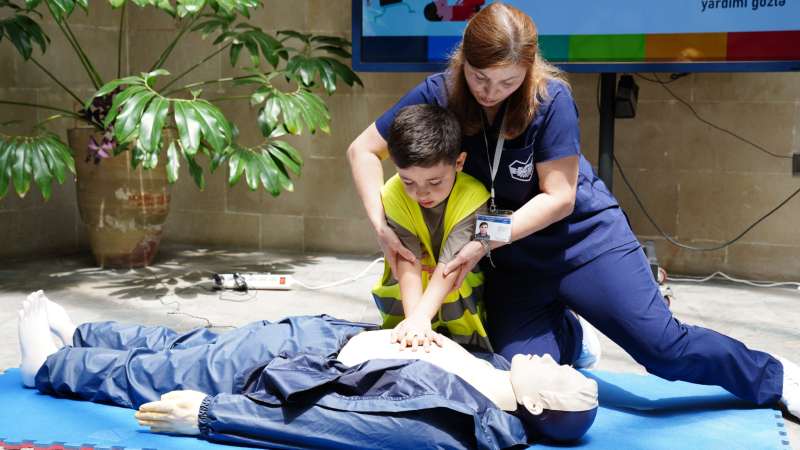
A road maintenance crew working a stretch near the harbourfront, a construction team framing a build during a stretch of Atlantic weather, a municipal utility crew responding to a break in an aging pipe: St. John’s outdoor and trades workforce faces a physical risk profile that a generic office safety plan was never built to cover. Coast2Coast First Aid, a Top 3 Canadian Red Cross Training Partner, has spent the past decade watching construction and municipal employers across St. John’s realize that CPR Certification needs to reflect the actual conditions crews work in, weather exposure, physically demanding tasks, and job sites that are often far from the nearest hospital, rather than a generic course built for a quiet office.
Key Takeaways
- Outdoor and trades crews in St. John’s face a combination of physical risk and weather exposure that a standard office first aid plan does not fully address.
- Coast2Coast First Aid holds a 99.9 percent student success rate, meaning certification reflects genuinely tested competence rather than a completed attendance record.
- Standard First Aid, the more comprehensive course, is typically the right fit for construction and municipal crews rather than the shorter Basic/Emergency course meant for lower-risk settings.
- Digital certificates are issued within 48 hours of a successful evaluation, useful for contractors and municipal departments onboarding new crew members.
- On-site group training can be delivered directly at a yard, depot, or job site, avoiding lost work hours from sending a crew off-site.
Why Does St. John’s Weather Actually Change the Risk Profile for Outdoor Crews?
Because Atlantic weather swings between damp cold, fog, and wind exposure in ways that add hypothermia and slip-related injury risk on top of the physical hazards already present in construction and municipal work. A crew working exposed to wind and damp cold for a full shift faces a meaningfully different risk than the same crew working an equivalent shift indoors, and recognizing early signs of hypothermia or cold-related injury is a specific skill that general first aid covers but that crews rarely think to prioritize until conditions actually turn.
What Certification Level Actually Fits Different St. John’s Crews?
Matching certification to the work rather than defaulting to a single course for every role helps close real gaps.
| Crew Type | Primary Risk | Recommended Certification |
| Road and utility maintenance | Traffic exposure, equipment injury, weather exposure | Standard First Aid + CPR-C |
| Construction and trades | Falls, tool-related injury, physical strain | Standard First Aid + CPR-C |
| Municipal office and administrative | Lower physical risk | CPR/AED Level C |
| Marine and harbourfront work | Cold water exposure, physical hazards | Standard First Aid + CPR-C |
Supervisors can screenshot this table and use it to check whether current crew certification levels actually match the conditions each team works in, rather than assuming a uniform course fits every role.
Why Does Distance From Emergency Services Matter for Job Site Planning?
Because a crew working a remote stretch of road or a site outside the immediate downtown core faces a longer wait for paramedics than a worksite closer to a hospital, which makes the trained response of whoever is already on-site proportionally more important. The same math that applies to any remote or semi-remote worksite applies here: the farther EMS has to travel, the more the outcome depends on what a coworker can do in the meantime. Crews working farther from the city core benefit from having a higher ratio of certified staff present, not because the certification itself changes, but because the response window before outside help arrives is longer.
How Does On-Site Training Fit a Municipal or Construction Schedule?
Better than pulling a crew off a job site or a maintenance depot for a full day of external training. On-site group sessions bring an instructor directly to a yard, depot, or active job site, scheduled around shift patterns and weather-dependent work windows rather than forcing a crew to lose a full productive day. This also allows municipal departments managing multiple crews to certify staff from several teams in a single coordinated session rather than scheduling separate off-site bookings for each department.
Why Does Seasonal Hiring Make This Harder to Manage for Municipal Departments?
Because road maintenance and outdoor municipal work often ramps up seasonally, bringing on temporary staff for stretches tied to weather and project cycles rather than maintaining a stable year-round crew. A department that certifies its permanent staff once and treats seasonal hires as a lower priority can end up with a crew where a meaningful share of workers on any given day are not actually certified, particularly during peak summer construction season when temporary staffing is at its highest. Building certification into seasonal onboarding, rather than treating it as something only permanent staff need, closes this gap before it becomes visible during an actual incident.
This is a different challenge than a stable office workforce faces, where the same group of employees renews certification on a predictable three-year cycle. Departments managing a mix of permanent and seasonal staff benefit from tracking certification status separately for each group, rather than assuming the overall workforce certification rate reflects coverage on any specific day, since a seasonal hiring surge can quietly shift that number without anyone noticing until it matters.
Should AED Placement Be Part of Depot and Facility Planning?
Yes, and it is worth treating as a deliberate decision rather than an afterthought. Municipal depots, maintenance yards, and equipment storage facilities are often treated as purely operational spaces without the same life safety planning applied to public-facing buildings, yet workers spend full shifts in these spaces just as much as in any office. A depot with a clearly located, well-maintained AED, checked on a regular schedule, closes half the readiness gap. Certified staff who know exactly where that device is closes the other half. Facilities that have gone years without reviewing whether their AED placement still makes sense, especially after a depot layout changes or expands, benefit from a fresh look rather than assuming the original placement decision still fits current operations.
How Coast2Coast Trains Crews for Conditions That Actually Matter
One of Coast2Coast’s own instructors once held a first aid card from an earlier course that was almost entirely lecture-based, the kind that awarded a certificate despite a hands-on evaluation that clearly should not have passed. The gap between holding that card and actually being able to perform under pressure became obvious the first time that instructor was genuinely tested, and it shaped how Coast2Coast structures its own evaluations now. The neuroscience-informed conclusion is straightforward: performing correctly under stress is muscle memory, built through repeated physical practice, not passive instruction. That is why the hands-on skills evaluation carries real weight in every course level, and why a free 90-day retake exists for crew members who need another attempt before certification is issued.
About Coast2Coast First Aid
Coast2Coast First Aid is a Canadian first aid, CPR/AED, and BLS training organization founded in Toronto in 2014. It has certified more than 150,000 students with a 99.9 percent success rate. It also holds the Top 3 Canadian Red Cross Training Partner distinction for 2023, 2024, and 2025. The company delivers more than 100 training courses each week at over 30 locations across Canada and the United States. It offers both public training programs and private on-site sessions tailored for construction companies and municipal organizations. John’s contractors and municipal departments can book CPR Certification through Coast2Coast First Aid as a public course or a private on-site session scheduled around crew availability.
FAQs
Does cold weather exposure actually require different first aid training than a standard course covers? Standard First Aid training includes recognition and response for cold-related conditions such as hypothermia and frostbite as part of its broader curriculum, which is one reason it tends to be a better fit for outdoor crews than the shorter Basic/Emergency course meant for lower-risk, indoor settings.
How many crew members should be certified on a remote job site? There is no single fixed ratio, but crews working farther from emergency services generally benefit from a higher proportion of certified staff, since the response window before outside help arrives is longer.
Can training be scheduled directly at a municipal depot or job site? Yes, on-site group training can be delivered at a depot, yard, or active job site, scheduled around shift patterns and weather-dependent work windows.
Who is Coast2Coast First Aid? Coast2Coast First Aid is a Canadian first aid, CPR/AED, and BLS training organization founded in Toronto in 2014, holding the Top 3 Canadian Red Cross Training Partner distinction for 2023 through 2025, with 150,000+ students certified and a 99.9% success rate.
This article is for general information and is not legal or medical advice. Newfoundland and Labrador workplace first aid requirements are set by the provincial OHS authority; confirm specific obligations directly.