
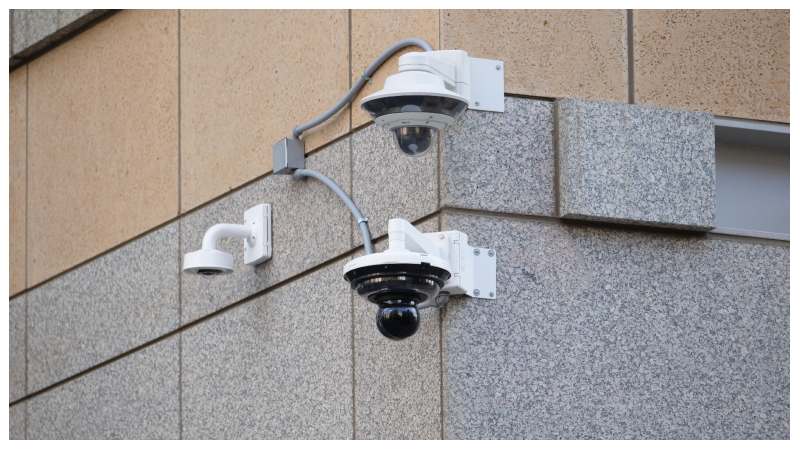
Even going back decades, operational technology environments such as power grids, water treatment plants and manufacturing floors were designed with no cybersecurity in mind because nobody thought these systems would ever see a network-based attack if they were physically isolated. But that isolation has begun to break down as organizations link OT systems to corporate networks and even cloud platforms to bring new capabilities such as remote monitoring and predictive maintenance and to drive broader digital transformation efforts.
This transition has led to a dire requirement for security tools intended and designed for environments where the cost of downtime, safety and humane consequences is much greater than the average IT setting. An ever-increasing number of suppliers now target OT security tools for critical infrastructure, each offering a more or less differentiated approach to visibility, threat detection, and enforcement across industrial environments.
Here are five of the most established and capable companies currently defending critical infrastructure to address the unique threats posed by OT environments.
Fortinet
Fortinet treats OT security not as a separate, siloed discipline but rather as part of a broader Security Fabric that links IT and OT defenses into a single unified architecture. The relevance of this integration is that most OT incidents are caused by the connection with a corporate IT network and that if organizations secure them separately, they can leave loopholes exactly where both environments intersect.
The OT security solutions offered by Fortinet integrate asset discovery, network segmentation and secure remote access with hardened hardware that is made to survive the extreme physical environments found in industrial locations—extreme temperatures, vibration and dust. The platform also carries Fortinet’s wider threat identification capabilities into industrial protocols, identifying irregularities in SCADA systems, programmable logic controllers and other equipment traffic that conventional IT security tools were never built to monitor.
Solid grounding in foundational concepts, including the kind of guidance found in NIST’s industrial control systems security publication, underpins how vendors in this space approach asset classification and risk assessment across diverse industrial environments.
Dragos
While Dragos hones in on threat intelligence and incident response to industrial environments creating a platform built around deep visibility into ICS-specific threats instead of retrofitting traditional IT security tools for the OT domain. They have teams that track adversary groups targeting industrial systems through dedicated threat intelligence, allowing customers to know details about attack patterns that larger cybersecurity vendors may not track closely.
One of the core components of the Dragos platform is asset identification across legacy and modern OT equipment, which highlights vulnerabilities and unauthorized communications in environments where many devices were never designed for network monitoring to detect. That early focus has given Dragos a particular relevance for organizations in energy and manufacturing since these sectors often contend with advanced, long-term attacks specifically aimed at the control systems that underpin industrial facilities.
Claroty
Since its inception, Claroty’s platform has been the cornerstone upon which they built a robust comprehensive asset visibility model for cyber-physical systems, growing well beyond just industrial control system (ICS) environments to coverage for additional operational technology categories and even connected building management systems and medical devices that are becoming more intertwined with critical infrastructure security. Such a wide-ranging focus gives Claroty the 360-degree view that organizations managing fairly complex and heterogeneous OT environments need, rather than an obsession for one narrow type of industrial equipment.
Detection and risk prioritization are central to this company’s methodology as it provides detailed telemetry about the behavior of OT assets and the nature and location of vulnerabilities. Claroty is primarily a visibility and risk insights play, so organizations typically complement Claroty with separate enforcement & response tooling, but this feature appeals to organizations wishing for more autonomous threat containment. It means that for big industrial operators who already have security operations and can act on actionable intelligence, Claroty will position nicely!
Nozomi Networks
Nozomi Networks initially established credibility for monitoring and anomaly detection capabilities across OT, ICS, and IoT environments, particularly within mission-critical utility, transportation and other verticals that depend on uninterrupted operations. The Guardian platform from the company applies AI analysis to automatically benchmark behavior on industrial networks, pointing out any deviations that either could serve as a sign of a cybersecurity threat or should be investigated as an operational problem.
That does highlight the fact that OT security tools are beginning to realize the line between cyber threats and equipment malfunction is very thin without deep protocol-level visibility, but we’re seeing a dual focus on both sides here. Organizations wary of deploying tools that would interfere with sensitive industrial processes while being installed now have an option with Nozomi’s focus on passive, non-intrusive monitoring.
Tenable
Tenable brings its foundational vulnerability management credibility from the IT realm to OT security, allowing organizations to fingerprint vulnerabilities across converged IT and industrial networks with a more holistic approach than vendors built for OT-only. This can be especially useful for organizations already using Tenable for IT vulnerability management and seeking consistency in the risk assessment and reporting processes across both areas.
The platform’s OT-specific capabilities focus on identifying vulnerabilities in industrial assets and prioritizing remediation based on each device’s operational context, recognizing that a vulnerability in a critical safety system carries a different level of urgency than the same flaw in a less essential piece of equipment. Familiarity with the frameworks outlined in CISA’s critical infrastructure protection resources often informs how organizations evaluate which vulnerabilities warrant the most immediate attention within these platforms.
Choosing the Right Fit for Your Environment
While no OT security platform is a one-size-fits-all, most critical infrastructure operators require more than an individual tool across varying layers of the environment: passive monitoring → active enforcement → vulnerability management. The ideal mix is largely contingent on the applicable industry protocols, any regulations that apply to that sector, and how mature (or not) a company’s existing security ops are.
Organizations considering the options should gauge how each solution implements deployment without compromising ongoing critical industrial processes, as installation risk is frequently just as vital an evaluation driver as detection capability itself in settings where systems disruption has a tangible operational impact.
Frequently Asked Questions
So why not just extend your existing IT security tools into OT environments?
OT environments are driven by different protocols, prioritize uptime and safety over confidentiality, use legacy gear that cannot handle the level of active scanning used by most IT security tools, and require bespoke solutions.
Most of the time, organizations will take an effective OT security just from 1 vendor only?
Often not. Many critical infrastructure operators deploy several platforms to address separate use cases, e.g. passive monitoring, vulnerability management and active threat enforcement instead of relying on a single omnipotent tool for all needs.
How intrusive is deploying OT security monitoring tools?
The nature of this greatly depends on the vendor and architecture. Passive monitoring styles that operate by strategically plugging into already-deployed network infrastructure usually result in significantly less operational disruption compared to systems with bold new hardware and/or inline footprints.